Our economic overview of Canada covers the country’s GDP statistics, top commodity exports, and top commodity imports.
We also dive into the additional detail on Canada’s petroleum, gold, wheat, aluminum, and rapeseed trade.
Once you’re familiar with Canada’s trade, you can learn about different ways to trade commodities of interest.
Canada’s Economic Overview
Canada is the 12th largest product export economy in the world but it currently has a negative trade balance of $62 billion CAD (2020 figures) when you deduct its annual import total of $369 billion from its export total of $431 billion.
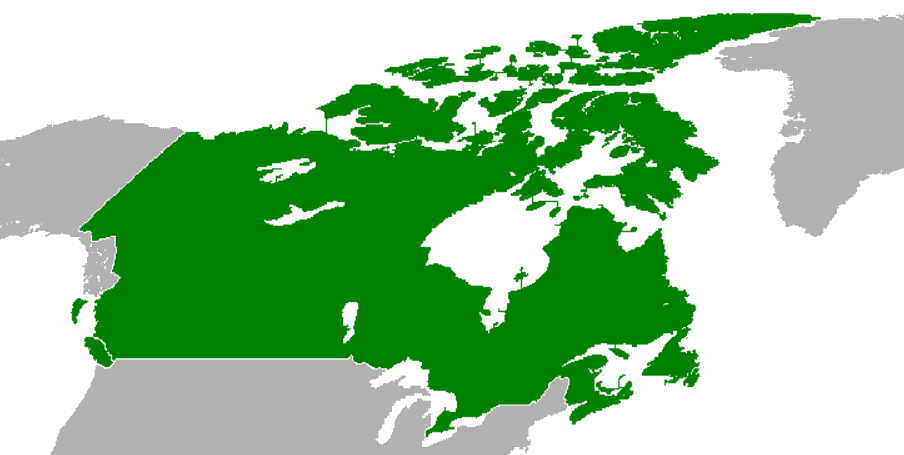
Canada’s GDP is $1.71 trillion, which equates to a GDP per capita figure of $46,233.
From a total volume of $377 billion in product exports in 2017, Canada’s exports grew by 12.7% to $431 billion in 2018.
Canada’s Top Commodity Exports
Here are Canada’s five most exported commodities:
| Commodity | Amount (Annually) |
|---|---|
| Crude Petroleum | $39.5 billion |
| Gold | $12.5 billion |
| Wheat | $4.5 billion |
| Aluminum | $5.04 billion |
| Rapeseed | $4.28 billion |
Data last reviewed:
Source: Compiled from public trade data — Observatory of Economic Complexity and World's Top Exports, both derived from UN Comtrade. Figures reflect data compiled in 2026 and have not been refreshed. For current figures consult the source databases directly.
Canada’s Other Notable Exports
- Cars – $48.8 billion
- Vehicle Parts – $10.6 billion
- Sawn Wood – $7.74 billion
- Gas Turbines – $5.21 billion
- Iron Ore – $2.8 billion
The United States is the top export destination of Canada with $296 billion of its annual exports, followed by China at $15.8 billion and the United Kingdom at $12.9 billion.
Canada’s Top Commodity Imports
Canada’s five most imported commodities are:
| Commodity | Amount (Annually) |
|---|---|
| Refined Petroleum | $11.1 billion |
| Gold | $5.6 billion |
| Coffee | $1.19 billion |
| Silver | $1.27 billion |
| Aluminium | $1.41 billion |
Data last reviewed:
Source: Compiled from public trade data — Observatory of Economic Complexity and World's Top Exports, both derived from UN Comtrade. Figures reflect data compiled in 2026 and have not been refreshed. For current figures consult the source databases directly.
Canada’s Other Notable Imports
- Cars – $26.4 billion
- Vehicle Parts – $20.4 billion
- Computers – $8.76 billion
- Packaged Medicaments – $7.23 billion
- Seats – $3.53 billion
More Information on Canada’s Most Traded Commodities
The following commodity’s play significant roles in the Canadian economy as some of the most traded raw materials.
Crude Petroleum
In 2018, Canada was the fourth-largest crude oil exporter in the world with a 6.19% share of an annual global export market worth $1.08 trillion.
This gives Canada a total share of $66.6 billion of the oil export market. As of August 2020, Canada’s share of crude oil exports is down to $5.27 billion.
45.4% of the total annual crude petroleum imports of the United States comes from Canada.
Gold Exports From Canada
Canada ranks 7th in the global league table of gold exporting countries and controls 4.24% of the market.
32.1% of the United Kingdom‘s gold imports come from Canada. The United States also imports 17% of it’s gold from Canada.
Ontario is the largest gold-producing region in Canada with a total of 20 gold mines, out of a total of 31 metal mines.
Wheat Exports From Canada
Canada is the 2nd largest wheat exporting country in the world with a 12.8% market share and competes with the United States (12.6%) behind Russia (23.8%).
Canada’s total volume of wheat exports fell by 14.2% in the last five years, though its market share grew to get ahead of the United States.
Aluminum Exports From Canada
Canada has a 10.7% share of the annual global raw aluminum export market which is worth $61.1 billion. This makes Canada the largest raw aluminum export nation.
The total of Canada’s raw aluminum exports amounts to $6.52 billion annually, a 10.9% growth from $5.88 billion in the last five years.
The second-largest exporter of raw aluminum is the United Arab Emirates, close behind Canada with a 10.1% market share and $6.18 billion
Rapeseed Exports From Canada
Canada is the leading exporter of rapeseed with a 42.5% share of the annual market. Their closest rival is Ukraine with a 9.67% market share and Australia with a 9.04% market share of annual exports.
In the last five years, Canada’s total rapeseed exports increased by $193 million — that’s a 4.54% growth.
96.5% of China’s rapeseed imports originates from Canada.
A Few Interesting Facts About Canada
- Canada is one of the most educated countries in the world with around half of its residents having college degrees.
- The country has more lakes than the rest of the world combined.
- There are fewer people in the whole of Canada than in Tokyo’s metropolitan area.
All figures based on the 2018 OEC and 2016 IMF projections, unless stated otherwise.
Where Can I Trade Commodities?
If you want to explore ways to trade some of Canada’s most imported and exported commodities, see our list of regulated brokers available in .
| Broker | Details | Sign up |
|---|---|---|
 | User friendly platform and leading risk management tools. | Open Account Now Plus500 Review |
 | Social trading to copy leading traders. | Open Account Now eToro Review Copy Trading does not amount to investment advice. The value of your investments may go up or down. Your capital is at risk. |
 | Established for 40+ years. | Open Account Now HYCM Review |
 | Proprietary technical analysis features. | Open Account Now Markets.com Review |
 | Up to 400:1 leverage available for professional traders. | Open Account Now AvaTrade Review |
 | Reverse trades up to 1 hour with dealCancellation. | Open Account Now easyMarkets Review |
 | Up to 500:1 leverage for pro traders, share CFDs on stocks with no mark-up. | Open Account Now Pepperstone Review |
 | Multiple trading platforms and over 1,700 stocks. | Open Account Now XTB Review |
Data last reviewed:
CFDs are complex instruments and come with a high risk of losing money rapidly due to leverage. Between 52.00%-86.00% of retail investor accounts lose money when trading CFDs. You should consider whether you can afford to take the high risk of losing your money.
Further Reading
If you want to learn more about Canada’s most traded commodities, our trading guides on CFDs, options, bullion dealers, and stock brokers may interest you.
In addition, you can browse our general commodity category guides on:
Update history
This page was revised 5 times between July 2020 and January 2021.
Updated statistics across six commodity sections with 2020 data, restructured five section headings for clarity, and added specific market share figures for UK and US gold imports plus China's rapeseed dependency.
Restructured Further Reading section with new commodity category guides, removed broker recommendation links, and clarified trading guidance language.
Added economic overview with GDP growth data, detailed breakdowns of Canada's top five commodity exports and imports, profiles of major traded commodities including wheat, and trading guidance.
Added image with caption to Economy of Canada – Overview section.
Added data on Canada's top exports and imports with tables, expanded commodity analysis across five sectors (crude petroleum, gold, wheat, aluminum, rapeseed), and included new facts section.
The Commodity Briefing
The stories behind the prices. Surprising, useful, occasionally weird - in your inbox every weekday.
- Price moves
- Supply shocks
- Macro drivers
Before you go
Get The Commodity Briefing - free, 2 minutes.